Resources & Associations
The tools and people you need to succeed at every level
Resource Directory
National Pole and Structure is a family owned and operated company in SE Michigan founded in 2004 by John Van Haren of Ypsilanti, Michigan. In the last thirty years John has shared his knowledge and expertise to help get the job done right. National Pole and Structure has worked with many contracting companies and the Department of Transportation in several states
Resources
Associations
asic.org
The American Institute of Steel Construction (AISC) Certification sets the quality standard for the steel industry and is the most recognized national quality Certification program for the structural steel industry.
transportation.org
AASHTO is a nonprofit, nonpartisan association representing highway and transportation departments in the 50 states, the District of Columbia, and Puerto Rico. It represents all five transportation modes: air, highways, public transportation, rail, and water. Its primary goal is to foster the development, operation, and maintenance of an integrated national transportation system.
galvanizeit.org
American Galvanizers Association The AGA is a non-profit trade association dedicated to serving the needs of after-fabrication galvanizers, fabricators, architects, specifiers, and engineers. The AGA provides technical support on today's innovative applications and state-of-the-art technological developments in hot-dip galvanizing for corrosion control
powdercoating.org
Learn More
The Powder Coating Institute's mission is committed to serving its members by promoting the benefits of powder coating technology. Formed on May 1, 1981, as a non-profit organization, PCI works to advance the utilization of powder coating as an economical, non-polluting and high quality finish for your industrial and consumer products. To see more about PCI, please use the drop-down menu above to view our staff, board of directors, committees, testimonials, as well as how to become a member.
ferc.org
Learn More
The Federal Energy Regulatory Commission (FERC) is the United States federal agency with jurisdiction over interstate electricity sales, wholesale electric rates, hydroelectric licensing, natural gas pricing, and oil pipeline rates. FERC also reviews and authorizes liquefied natural gas (LNG) terminals, interstate natural gas pipelines, and non-federal hydropower projects. The top priorities in 2014 include: smart grid demand response integration of renewables natural gas - electric coordination Order No. 1000 - transmission planning and cost allocation
National Snapshot: U.S. Data Center Footprint
The U.S. has thousands of data centers across the country — industry sources list over 4,000 facilities from coast to coast. Data Center Map
Significant clusters are found in major tech and connectivity hubs. Pew Research Center
Major Data Center Hubs in the United States
These are regions with high concentrations of operational and permitted centers:
Top U.S. Locations
- Northern Virginia (Ashburn / Loudoun County) — Often called the Data Center Capital of the World for its massive fiber networks and connectivity. CoreSite
- Dallas–Fort Worth / Texas — Rapidly growing hub with hundreds of centers. Pew Research Center
- Silicon Valley & Northern California — Traditional tech center with many major facilities. Brightlio - Technology Iluminated
- Phoenix Metro (Arizona) — Increasingly popular for cost and climate. Brightlio - Technology Iluminated
- Chicago (Illinois) — Central U.S. connectivity hub. Brightlio - Technology Iluminated
- Atlanta (Georgia) — Growing regional data center market. Brightlio - Technology Iluminated
- New York / New Jersey — Large financial and media hub data centers. Brightlio - Technology Iluminated
- Portland & Seattle (Pacific Northwest) — Emerging markets due to power infrastructure. Brightlio - Technology Iluminated
Examples of Major Data Center Facilities & Operators
Here are some specific facilities and operators with U.S. footprints (examples of permitted/operational sites):
Cloud & Hyperscale Providers
- AWS (Amazon Web Services) — e.g., IAD23 Ashburn, various U.S. sites. Datacenters
- Microsoft Azure — e.g., Quincy, WA; Virginia; Texas locations. Datacenters
- Google Data Centers — facilities in Iowa, Oregon, Texas, Georgia, and more. Google Data Centers
- Meta (Facebook) — Huntsville, AL; Mesa, AZ; Stanton Springs, GA; others. Meta Data Centers
- Oracle — data centers in Ashburn, VA, and beyond (also part of the Stargate initiative). Reuters
Colocation & Other Operators
- Equinix — e.g., DC2 Ashburn, NY4 Secaucus, Miami. Datacenters
- Digital Realty — large multi-site network across the U.S. Digital Realty
- QTS Data Centers — multiple U.S. facilities. QTS Data Centers
- Flexential — Dallas-Plano, Dallas-Downtown, Denver. Datacenters
- CyrusOne, CoreSite, Iron Mountain & Others — major colocation and enterprise data centers. Middletown Data Center
(This sample list represents a fraction of the ~4,000+ U.S. facilities.) Data Center Map
Where to Find Full Listings
Because no centralized federal register exists showing all permitted data centers, third-party databases are the closest resource:
- DataCenterMap.com (USA) — searchable directory of 4,200+ U.S. data centers. Data Center Map
- Datacenters.com – United States listings — searchable by operator and facility details. Datacenters
- Baxtel United States Data Center Directory — searchable market overview with stats. Baxtel
- ENERGY STAR Certified Data Centers list — shows ~316 certified centers (state-level only). ENERGY STAR
These sources let you filter by:
- Location (state/city)
- Operator/provider
- Capacity or size
- Construction status (operational vs. planned)
Federal & Planning Context
- The Department of Energy (DOE) has identified federal sites primed for expedited data center construction. The Department of Energy's Energy.gov
- Some local jurisdictions have moratoriums or regulations affecting permitting temporarily. Big Rapids Pioneer
Summary
There is no single government list of all permitted data centers in the U.S., but the country hosts thousands of facilities with directories available via specialized databases. Major tech companies and colocation providers operate many of the largest, while regions like Northern Virginia, Texas, and Silicon Valley remain key hubs. Data Center Map+1
What’s inside:
- State_directory_counts: State-by-state counts + clickable directory links (DataCenterMap shows 4,307 U.S. facilities listed). Data Center Map
- ENERGY_STAR_certified: 316 facility-level entries from EPA/ENERGY STAR (name/state/owner/etc.). ENERGY STAR
- Google_US_locations: Google’s listed U.S./North America locations (incl. “in development”). Google Data Centers
- Meta_US_fleet: Meta’s U.S. data center fleet locations with “break ground” year and other stats (as listed). Meta Data Center
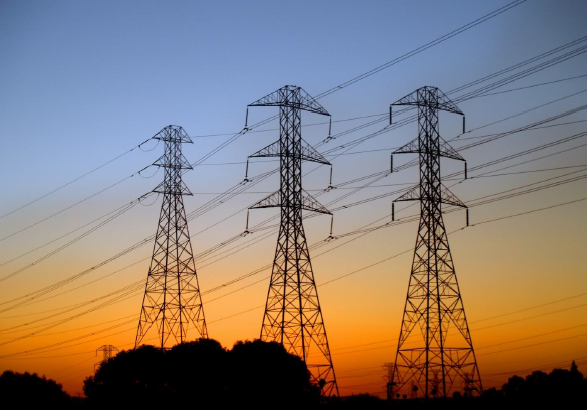
High-Voltage (Transmission) Poles
What they do
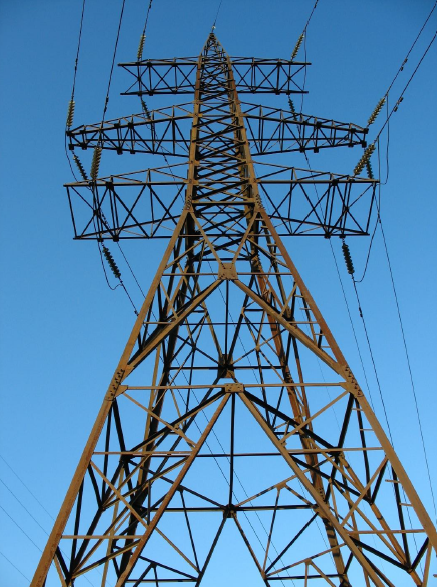
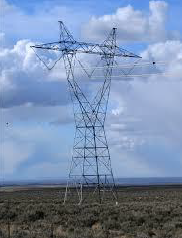
Move large amounts of electricity over long distances — from power plants, wind/solar farms, and substations to regional grid hubs.
Voltage range
- 69 kV
- 115 kV
- 138 kV
- 161 kV
- 230 kV
- 345 kV
- 500 kV+
Typical materials
- Steel monopoles (round or polygonal)
- Steel H-frames
- Lattice towers (older corridors)
Physical characteristics
- 60–180+ feet tall
- Long span lengths (400–1,200 ft)
- Large insulators (polymer or porcelain)
- Wide right-of-way (75–200+ ft)
Who owns / specs them
- Investor-owned utilities
- Transmission operators (ITC, AEP, Duke, etc.)
- RTO / ISO driven (PJM, MISO, ERCOT)
Why they matter to you
- Data centers, AI campuses, battery storage, and renewables require new or upgraded transmission
- Higher steel tonnage
- Engineered foundations
- Fewer poles, but big dollar per structure
Distribution Poles
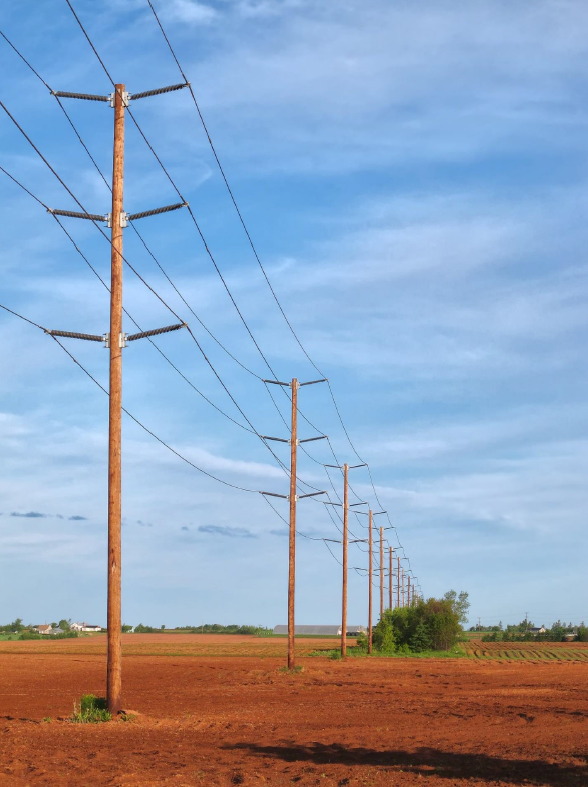
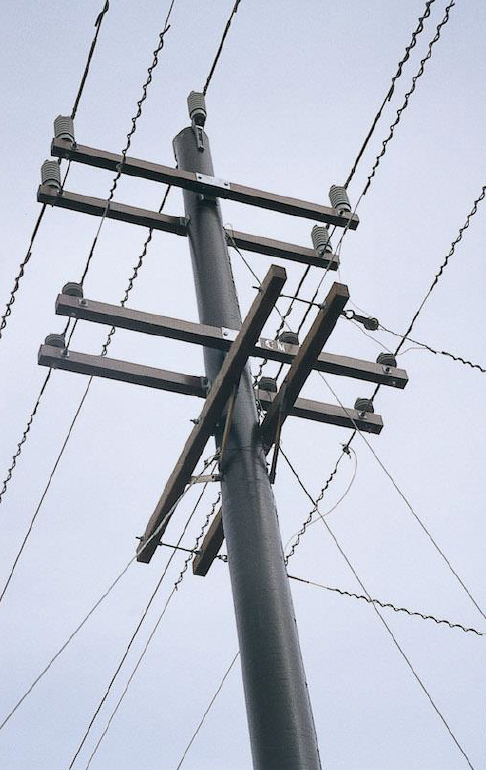
What they do
Deliver electricity locally — from substations to homes, businesses, and street infrastructure.
Voltage range
- 4 kV
- 7.2 kV
- 12.47 kV
- 13.2 kV
- 34.5 kV (upper end)
Typical materials
- Wood (Southern pine, cedar, Douglas fir)
- Steel (urban, coastal, or storm-hardening)
- Concrete (select regions)
Physical characteristics
- 30–55 feet tall
- Short spans (100–300 ft)
- Smaller insulators
- Narrow ROW (often public streets)
Who owns / specs them
- Local electric utilities
- Co-ops and municipalities
Why they matter
- Massive quantities
- Lower unit cost
- Frequent replacement cycles
- Easier access, faster installs
🧠 Side-by-Side Comparison
| Feature | Transmission Poles | Distribution Poles |
|---|---|---|
| Voltage | 69 kV – 500+ kV | 4 kV – 34.5 kV |
| Purpose | Long-distance bulk power | Local delivery |
| Height | 60–180+ ft | 30–55 ft |
| Material | Mostly steel | Mostly wood |
| Cost per pole | Very high | Low–moderate |
| Engineering | Heavy (wind, ice, galloping) | Light–moderate |
| Data center relevance | Critical | Secondary |
🎯 Why This Matters for National Pole & Structure
- Data centers = transmission first, distribution second
- New AI loads often require:
- New 230–345 kV lines
- Steel monopoles
- Substation dead-ends and angle structures
- Distribution upgrades follow after transmission capacity exists
High-Voltage (Transmission) Poles
What they do
Move large amounts of electricity over long distances — from power plants, wind/solar farms, and substations to regional grid hubs.
Voltage range
69 kV
115 kV
138 kV
161 kV
230 kV
345 kV
500 kV+
Typical materials
- Wood (Southern pine, cedar, Douglas fir)
- Steel (urban, coastal, or storm-hardening)
- Concrete (select regions)
Physical characteristics
- 30–55 feet tall
- Short spans (100–300 ft)
- Smaller insulators
- Narrow ROW (often public streets)
Who owns / specs them
- Local electric utilities
- Co-ops and municipalities
Why they matter
- Massive quantities
- Lower unit cost
- Frequent replacement cycles
- Easier access, faster installs
| Feature | Transmission Poles | Distribution Poles |
|---|---|---|
| Voltage | 69 kV – 500+ kV | 4 kV – 34.5 kV |
| Purpose | Long-distance bulk power | Local delivery |
| Height | 60–180+ ft | 30–55 ft |
| Material | Mostly steel | Mostly wood |
| Cost per pole | Very high | Low–moderate |
| Engineering | Heavy (wind, ice, galloping) | Light–moderate |
| Data center relevance | Critical | Secondary |
Why This Matters for National Pole & Structure
- Data centers = transmission first, distribution second
- New AI loads often require:
- New 230–345 kV lines
- Steel monopoles
- Substation dead-ends and angle structures
- Distribution upgrades follow after transmission capacity exist
What Is a Power Substation?
A substation is a controlled electrical hub where electricity is switched, transformed,
protected, and routed between different voltage levels.
Think of it as:
The gearbox + breaker panel + traffic controller of the power grid
What a Substation Actually Does
Steps Voltage Up or Down
Step-up substations
- Near power plants or wind/solar farms
- Raise voltage (e.g., 13.8 kV → 345 kV)
Step-down substations
- Near cities, factories, or data centers
- Lower voltage (e.g., 345 kV → 138 kV → 34.5 kV → 13.2 kV)
Higher voltage = lower losses over distance
Lower voltage = safe local distribution
Switches Power Flow
- Routes electricity between:
- Transmission lines
- Other substations
- Distribution feeders
- Allows utilities to reroute power during outages or maintenance
Protects the Grid
- Detects faults (shorts, lightning strikes, overloads)
- Automatically isolates the problem
- Prevents cascading blackouts
Major Physical Components (What You’d See on Site)
Power Transformers
- The largest, heaviest equipment
- Often 100–500+ tons
- Oil-filled, with cooling radiators
- Heart of the substation
Steel Structures & Gantries (your world)
- Support incoming/outgoing lines
- Dead-end structures
- Bus supports
- Rigid steel frames and lattice work
- These are engineered steel structures, not wood poles
Circuit Breakers
- Interrupt massive fault currents
- Can open in milliseconds
- SF₆ gas or vacuum types
Buswork (Rigid or Strain Bus)
- Aluminum or copper tubes/cables
- Acts like a power highway inside the yard
Insulators
- Porcelain or polymer
- Prevent current from flowing into the structure
Control House
- Relay panels
- SCADA systems
- Communications and protection logic
Types of Substations (By Function)
| Type | Purpose |
|---|---|
| Transmission Substation | Connects high-voltage lines (115–500+ kV) |
| Distribution Substation | Feeds local circuits (4–35 kV) |
| Switching Station | No voltage change — just routing |
| Collector Substation | Gathers wind/solar generation |
| Dedicated Data Center Substation | Built solely for hyperscale loads |
Why Substations Matter for Data Centers
- Dedicated substations
- Redundant transformers
- Multiple transmission feeds
- Steel dead-end structures
- 345 kV or 230 kV interconnects
A data center cannot operate without substation capacity — transmission lines feed into
substations, not directly to buildings.
Where National Pole & Structure Fits
- Line termination structures
- Substation gantries
- Rigid bus supports
- Transition poles (transmission → yard)
- Special engineered steel poles
This is high-margin, engineered steel, not commodity wood poles.